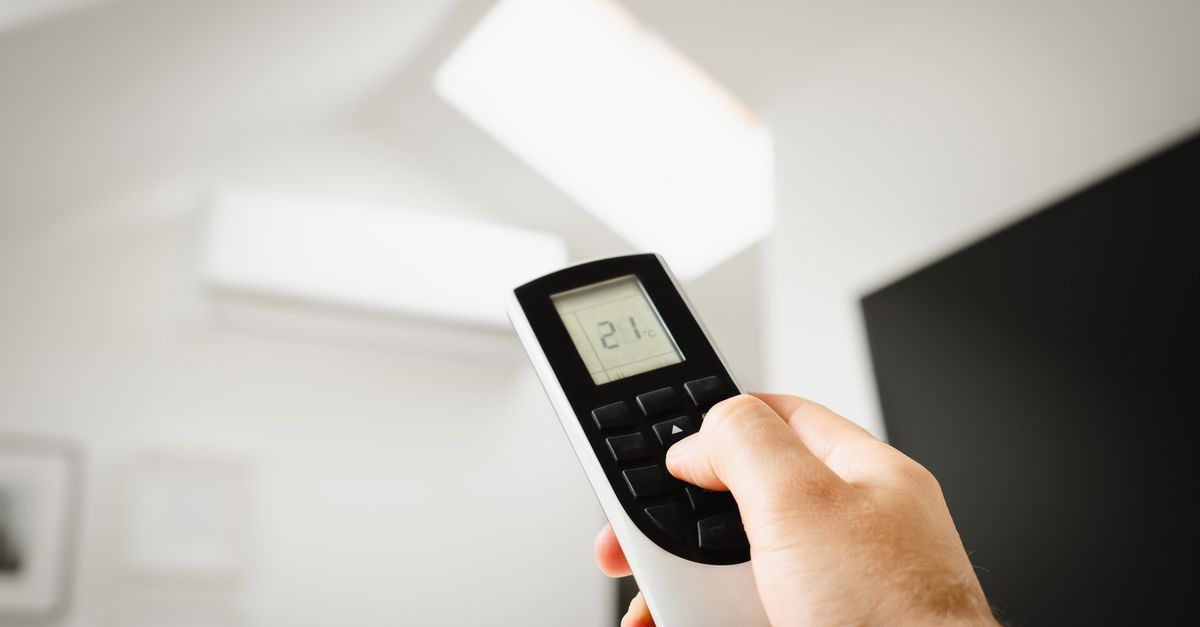
The 20-Degree Rule for Home Heating and Cooling: Why Most Advice Misses the Mark
You’ve likely heard the ‘20-degree rule’ or some variation of it for setting your home thermostat. The conventional wisdom usually dictates something like: set your thermostat to 20°C (68°F) in winter and 26°C (78°F) in summer to optimize for both comfort and energy savings. Sounds simple, right? The problem is, this rule, while well-intentioned, often leads to frustration, discomfort, and surprisingly, not the savings you anticipated.
I used to be a strict adherent to this rule. Every autumn, I’d bump the thermostat down to 20°C, and every spring, I’d push it up to 26°C. My logic was sound: if the experts say it saves money, it must. Yet, I’d constantly find myself shivering under blankets in winter or sweating through my clothes in summer, all while my energy bills remained stubbornly high. What was I missing? It turns out, the ‘20-degree rule’ is a simplification that ignores the complex interplay of your home’s unique characteristics, local climate, and personal physiological responses.
What changed everything for me was realizing that true energy efficiency and comfort don’t come from blindly following a single number, but from understanding the underlying principles of thermal dynamics and applying them to my specific living situation. It’s not just about a set temperature; it’s about managing heat transfer, humidity, and the inertia of your home’s envelope. In my experience, the mistake most people make is treating their thermostat like a simple on/off switch or a magic dial, rather than a sophisticated instrument for managing a microclimate. The goal isn’t to hit a specific numerical target, but to create a stable, comfortable environment efficiently.
Key Takeaways
- The static 20-degree rule often fails to deliver real comfort or significant savings.
- Understand your home’s thermal envelope and local climate for effective temperature control.
- Humidity management and air circulation are as crucial as temperature settings for perceived comfort.
- Implement setback strategies and zoning to optimize energy use and adapt to daily needs.
Your Home’s Thermal Envelope Trumps Generic Temperature Rules
The biggest flaw in the universal ‘20-degree rule’ is that it assumes all homes are created equal. They are absolutely not. The effectiveness of any thermostat setting is profoundly influenced by your home’s thermal envelope — essentially, how well your house is sealed and insulated. A well-insulated, modern home with double-pane windows and airtight construction will hold temperature very differently than a century-old house with drafty single-pane windows and minimal attic insulation.
In my own home, a 1950s ranch, I initially struggled because I was trying to impose modern energy-saving ideals onto a structure not designed for them. My old windows were massive heat sinks in winter and heat generators in summer. No matter how much I tried to maintain 20°C, the cold permeated the living room. Conversely, keeping the house at 26°C in summer felt like living in an oven because the sun beating down on the roof and through those same windows rapidly overwhelmed the AC.
What truly changed my approach was conducting a home energy audit. This wasn’t some complex, expensive procedure; I started with a DIY version. I walked around with an infrared thermometer and a stick of incense. The incense smoke revealed drafts around window frames, electrical outlets, and door thresholds. The thermometer showed significant temperature differences on interior wall surfaces, indicating poor insulation. I invested in sealing gaps with caulk and weatherstripping, adding insulation to my attic, and eventually replacing a few particularly problematic windows. These weren’t cheap fixes, but they fundamentally altered how my home interacted with the outside temperature. After these improvements, a 20°C setting in winter actually felt comfortable, and my furnace didn’t have to run constantly to maintain it. The ‘20-degree rule’ only became viable after I improved my home’s ability to retain or reject heat.
The actionable insight here is: before you blindly set a temperature, understand your home’s weaknesses and strengths. Address significant drafts and insulation gaps first. A smart thermostat is only as smart as the home it’s controlling. Without a solid thermal envelope, your HVAC system will constantly fight a losing battle, leading to higher bills and reduced comfort, regardless of the ‘optimal’ temperature you dial in.
Humidity is the Unsung Hero of Perceived Comfort
Temperature is only half the story when it comes to how warm or cool you feel. Humidity plays an equally critical, yet often overlooked, role. Our bodies regulate temperature through sweat evaporation. When humidity is high, sweat evaporates slowly, making us feel hotter than the actual air temperature. Conversely, very low humidity can make us feel colder, especially in winter, as our skin loses moisture more rapidly.
For years, I focused solely on the thermostat, wondering why 26°C felt stifling in summer even when the AC was running. I’d push the thermostat lower, only to feel clammy and wasteful. The revelation came when I installed a simple hygrometer (a humidity gauge) in my living room. I discovered that on humid summer days, my indoor humidity levels were consistently above 60%, even with the AC on. The air conditioner cools, but its dehumidifying capacity can be overwhelmed.
What made a dramatic difference was pairing my AC use with a whole-house dehumidifier. By keeping indoor humidity between 40-55% in the summer, I found that I could comfortably set my thermostat to 27°C (80°F) or even 28°C (82°F) and feel more comfortable than I did at 26°C with higher humidity. My AC ran less, and my dehumidifier, while using some energy, resulted in a net energy saving because the AC didn’t have to work as hard to cool to lower, less effective temperatures. This also extended the life of my AC unit by reducing its workload.
In winter, the opposite problem often occurs. Heating can dry out the air, making 20°C feel much colder than it actually is. Installing a whole-house humidifier (or even strategically placed portable humidifiers) in my home allowed me to maintain a more comfortable perceived temperature at 20°C, preventing dry skin, static electricity, and even helping to preserve wood furniture. I could often even drop the thermostat to 19°C (66°F) and still feel cozy.
The actionable insight here is: monitor and manage your home’s humidity. Invest in a hygrometer to understand your baseline. In summer, consider a dehumidifier if your AC isn’t enough. In winter, add humidity. You’ll achieve better comfort at less extreme temperature settings, leading to tangible energy savings and a more pleasant living environment.
Strategic Setbacks and Zoning: Tailoring Temperature to Your Day
The ‘20-degree rule’ often implies a static setting, maintaining the same temperature around the clock. This is one of the most inefficient ways to operate your HVAC system. Your home’s heating and cooling needs fluctuate significantly throughout the day based on occupancy, external temperatures, and activity.
My energy bills began to noticeably decrease when I stopped trying to keep my entire home at a constant temperature. I live alone during the day, so heating or cooling unoccupied rooms to my preferred comfort level was a tremendous waste. The solution was strategic thermostat setbacks and, eventually, zoning.
I started with a programmable thermostat, setting it to drop to 17°C (62°F) in winter during working hours and overnight when I was asleep. In summer, it would rise to 28°C (82°F) during the day and overnight. The common misconception is that it takes more energy to bring a house back to temperature than to maintain it constantly. In my experience, and backed by energy experts, this is rarely true, especially if the setback periods are for several hours. The heat loss or gain during a setback period is less than the continuous energy expenditure to maintain an unnecessary temperature.
What further optimized this was zoning. My house is relatively small, but with the addition of smart vents, I could effectively create zones. My bedroom, for example, could be kept cooler at night in summer without trying to freeze the entire house, or warmer in winter. The living room, where I spend most evenings, could be brought to optimal comfort just an hour before I typically used it, then scaled back.
The actionable insight: don’t treat your home as a single thermal unit 24/7. Utilize programmable or smart thermostats to schedule setbacks when you’re away or asleep. If possible, explore zoning solutions for different areas of your home. This approach aligns your energy use with your actual occupancy and comfort needs, leading to significant savings that a static ‘20-degree rule’ can never deliver.
Airflow and Circulation: Maximizing Your System’s Output
Even with a perfect thermal envelope, ideal humidity, and smart setback schedules, your comfort can be undermined by poor airflow and circulation. The temperature a thermostat reads might be 20°C, but if the air isn’t moving effectively, you can still experience hot or cold spots.
I learned this the hard way during a particularly stubborn winter. My furnace was running, the thermostat was at 20°C, but one end of my living room always felt chilly. I suspected an insulation issue, but my audit didn’t reveal anything major. The real culprit was a combination of blocked vents and dirty filters.
My couch was partially obstructing a floor vent, and my return air registers were choked with dust and pet hair. This created stagnant air pockets and forced my HVAC system to work harder to push air through constricted pathways. Once I moved the furniture, cleaned the registers, and committed to replacing my furnace filter every 1-3 months, the difference was immediate. The air felt more evenly distributed, and the perceived comfort improved dramatically. It allowed my system to distribute conditioned air more efficiently, reducing run times and evening out temperatures across the room.
Another simple, yet powerful, tool I started using more intentionally were ceiling fans. Many people associate ceiling fans only with cooling. However, by reversing their direction in winter (to push warm air down), they can effectively destratify the air, making a room feel warmer without raising the thermostat. In summer, running them clockwise creates a cooling breeze that often allows you to raise your AC set point by 1-2°C without sacrificing comfort.
The actionable insight: optimize your home’s airflow. Ensure all supply and return vents are clear of obstructions. Regularly clean or replace your HVAC filters. Utilize ceiling fans year-round to improve air circulation and perceived comfort. These small, low-cost adjustments can significantly enhance the effectiveness of your thermostat settings and contribute to lower energy bills.
Rethink the Source of Heat and Cold: Radiant vs. Convective Comfort
Finally, it’s crucial to consider how your home is being heated or cooled. Most modern HVAC systems use convective heating/cooling, meaning they heat or cool the air directly. While effective, this can create challenges if not managed well. However, understanding the difference between convective and radiant comfort can liberate you from strict thermostat numbers.
In my office, which is a converted sunroom, the large windows made it difficult to maintain a consistent temperature with the main HVAC system. In winter, even if the air temperature was 20°C, the cold radiating from the glass made the room feel significantly colder. In summer, the direct sunlight often led to overheating, despite the AC blowing cool air.
My solution wasn’t to crank the thermostat to extreme settings, but to introduce elements of radiant heat and shade. In winter, I installed a small, wall-mounted radiant heater. Unlike a forced-air space heater, which heats the air (often making the primary thermostat work harder), a radiant heater warms objects and people directly. This meant I felt comfortably warm even if the ambient air temperature was a degree or two lower than 20°C, and without taxing the main furnace. In summer, I installed blackout blinds and used strategically placed plants to block direct sun, reducing the radiant heat gain.
The same principle applies to your personal comfort. If you feel cold in winter, rather than immediately raising the thermostat, consider putting on a sweater, using a warm blanket, or even a small personal radiant heater (used responsibly and sparingly). If you’re hot in summer, first think about wearing lighter clothing, drinking a cold beverage, or drawing curtains to block direct sunlight before lowering the AC drastically.
The actionable insight: don’t rely solely on air temperature for comfort. Understand the role of radiant heat and cold. Employ personal strategies like clothing and blankets. Supplement with targeted radiant heaters or shade solutions to enhance comfort in problematic areas, allowing you to maintain less extreme, more energy-efficient whole-house thermostat settings.
Frequently Asked Questions
What is the most energy-efficient temperature to set my thermostat in winter?
Generally, setting your thermostat to 19-20°C (66-68°F) during the day and lowering it to 16-17°C (60-62°F) at night or when away can maximize energy efficiency without sacrificing too much comfort. However, this depends heavily on your home’s insulation and local climate. Prioritizing humidity management (around 40-55%) can also make these lower temperatures feel more comfortable.
How much can I save by adjusting my thermostat by a few degrees?
Energy Star suggests that you can save about 10% a year on heating and cooling by simply turning your thermostat back 7°-10°F (about 4°-6°C) for 8 hours a day from its normal setting. This translates to significant savings over time, especially if combined with other efficiency measures like sealing drafts and managing humidity.
Is it more efficient to keep the thermostat at a constant temperature or adjust it throughout the day?
It is generally more efficient to adjust your thermostat throughout the day, implementing setbacks when you are away or asleep. The notion that it takes more energy to reheat or recool a house than to maintain a constant temperature is largely a myth for typical residential settings. Your HVAC system will recover the temperature efficiently, and the energy saved during the setback period will outweigh the energy used for recovery.
What role does insulation play in thermostat effectiveness?
Insulation is critical. A well-insulated home minimizes heat transfer between the interior and exterior. This means your HVAC system doesn’t have to work as hard to maintain your desired temperature, making your thermostat settings far more effective and leading to lower energy bills. Without adequate insulation, your system will constantly leak conditioned air or allow outside air in, diminishing any energy savings from thermostat adjustments.
How often should I change my HVAC filter?
Most manufacturers recommend changing standard 1-inch HVAC filters every 30-90 days, especially if you have pets, allergies, or a large family. A clogged filter restricts airflow, forcing your system to work harder and reducing its efficiency, directly impacting your comfort and energy consumption.
Conclusion
The ‘20-degree rule’ for home heating and cooling, while a popular guideline, often falls short of delivering true comfort and energy savings. It’s a simplification that overlooks the crucial nuances of your home’s unique characteristics, local climate, and personal comfort factors. True optimization comes from a holistic approach: understanding and improving your home’s thermal envelope, actively managing indoor humidity, implementing strategic thermostat setbacks and zoning, optimizing airflow, and considering the interplay of radiant and convective comfort.
By moving beyond a rigid number and embracing these layered strategies, you can transform your home into a consistently comfortable, energy-efficient sanctuary. Start with a DIY energy audit to identify weaknesses, invest in a hygrometer to monitor humidity, and get smart about how and when you condition your space. Your comfort will increase, and your energy bills will finally reflect your efforts. Take control of your home’s microclimate, and you’ll find that ‘optimal’ comfort is not a single number, but a dynamic, personalized balance.
Written by David Miller
health, wellness, and self-improvement
A seasoned freelance writer, David has a talent for researching diverse topics and crafting engaging narratives.
You Might Also Like

7 Reasons Your Smart TV Feels More Frustrating Than Fantastic
Smart TVs promise seamless entertainment, but often disappoint. Discover 7 overlooked reasons your TV is frustrating you, and how to fix them.

A Beginner's Guide to Thoughtfully Evaluating Online Reviews for Products
Learn to cut through online review bias and find genuinely useful product insights. Discover common pitfalls and how to spot authentic feedback.

A Practical Checklist for Choosing a Sustainable Coffee Maker
Don't just chase eco-friendly labels. This checklist helps you choose a sustainable coffee maker that truly reduces waste and lasts longer, based on real-world impact.